
Category Archives: RCL C

The Lament of Jesus: A Call to Conversion

Sermon
March 16, 2025
Rev. Enzo Pellini
Luke 13:31-35 (NIV)

31 At that time some Pharisees came to Jesus and said to him,
—Leave this place and go somewhere else. Herod wants to kill you.
32 He replied,
—Go tell that fox, “I will drive out demons and heal people today and tomorrow, and on the third day I will reach my goal.”
33 In any case, I must press on today and tomorrow and the next day—for surely no prophet can die outside Jerusalem!
34 »Jerusalem, Jerusalem, you who kill the prophets and stone those sent to you, how often I have longed to gather your children together, as a hen gathers her chicks under her wings, but you were not willing!
35 Look, your house is left to you desolate. I tell you, you will not see me again until you say, “Blessed is he who comes in the name of the Lord.”


On this second Sunday of Lent, the readings invite us to reflect on the path to salvation and the call to conversion. Today, the Gospel according to Luke 13:31-35 presents a deeply emotional moment in the life of Jesus—a lament for the city of Jerusalem, which resonates in each of us as an urgent call to reflect on our own relationship with God and our willingness to accept His protection and love.

Much has been said about this reading. Some believe that the people of Israel brought a curse upon their history by rejecting Jesus, and that the conflicts and difficulties they face today are a consequence of that rejection. We don’t know for sure, but what is clear is that all the early Christians were Jews. God does not look at a specific race or people; rather, He is faithful to those who accept and follow Him. Furthermore, conflicts, wars, and hatred have existed everywhere in the world throughout history.

Today, we are reminded of the importance of taking refuge under the wings of that hen who personifies Jesus, and we, the believers in Him, are her chicks. We are the ones who seek shelter in His Church, putting the community of believers first in our lives and recognizing the Word of God as authority over our decisions.

Do you believe there is a difference between those who do not believe in Jesus and reject His Church and those who do? Of course, there is. It’s like comparing the life of a chick under its mother hen’s wings with the life of those who choose to live without her protection. We should not be surprised by the consequences of a life without worshiping God and without His protection. Often, when we go through problems, people complain and shout: “Where is God?” They wonder why there are tragedies in the world, but today this text invites us to reflect: Were we like the chicks under the protection of the hen’s wings? Did the chicks recognize their mother hen?

Following this comparison, do we recognize Christ as our Lord? Do we shelter in the Church of Christ for our protection and well-being, or do we mock the Word of God, reject it, and reject Christ Himself?

When people firmly decide to accept Christ and begin to live a life of faith and trust in God, sheltered by His protective arms, that is what we call conversion. It’s hard to think of people who don’t make this decision and believe that they have truly experienced a conversion. In this Lent, we are specifically called to conversion, to those chicks who need to return under the care of the mother hen’s wings.

The Lament of Jesus: “Jerusalem, Jerusalem!” (Luke 13:31-35)
In today’s Gospel, some Pharisees warn Jesus that Herod wants to kill him. Jesus responds with a message of determination and lament: “Jerusalem, Jerusalem, you who kill the prophets and stone those who are sent to you!” This is not a mere complaint; it is a cry of pain for the hard-heartedness of the city that represents the chosen people. Jesus laments the constant resistance of Jerusalem, which, despite receiving so many messengers from God, has not listened to them.
The image Jesus uses, comparing Jerusalem to a mother hen who tries to gather her chicks under her wings, is incredibly tender, but also heart-wrenching. Jesus, in His love and compassion, desires to gather His people, offer them refuge and security under His protection, just as a hen cares for her chicks. However, Jesus’ lament reveals that, despite His desire, “you were not willing”; the people of Jerusalem reject the salvation He offers.
This rejection is not just a matter of the past. Through this image, Jesus is also speaking to us today. He invites us to ask ourselves: Are we willing to open our hearts and allow Him to shelter us under His wings? Or, like Jerusalem, do we prefer to follow our own paths, rejecting the invitation to salvation?
The covenant of God that Abraham experienced also extends to us. Even though, like Jerusalem, we often resist accepting God’s protection, He continues to offer His shield, His refuge, His salvation. He calls us, just like He did to Abraham, to trust His promise, not to fear, knowing that He is with us in times of difficulty.

Trust in God’s Protection: “The Lord is my light and my salvation” (Psalm 27)
Psalm 27 reinforces this idea of trusting in God’s protection. “The Lord is my light and my salvation; whom shall I fear?” The psalmist expresses a deep trust in God’s goodness, even when facing dangers and adversities. This trust is what Jesus offers to Jerusalem and to all of us. In the midst of chaos, darkness, and adversity, God is our light and our salvation, and He wants to provide us refuge under His wings, just as a hen cares for her chicks.

A Call to Perseverance: “Imitate me” (Philippians 3:17-4:1)
In Philippians 3:17-4:1, St. Paul urges us to follow the example of those who live according to the call of Christ. He encourages us to stand firm in our faith and persevere on the path to salvation, always looking toward heaven, our true homeland. During this Lenten season, we are invited to renew our trust in God and persevere in faith, knowing that, like Jerusalem, we often face challenges and temptations. However, the example of Jesus and the apostles encourages us to stand firm and press on, knowing that the final victory is in Christ.

A Call to Conversion and Acceptance of Salvation
The readings today, especially the Gospel, call us to conversion. Jesus deeply laments the rejection of Jerusalem, but at the same time, He offers us a new opportunity to draw closer to Him. The time of Lent is a time of grace, a time to reflect on our willingness to accept the salvation He offers. Just as Abraham trusted God’s promises and the psalmist trusted in His protection, we are also called to trust God completely and walk toward Him with open hearts.
Jesus does not force His salvation upon us; He invites us with love, calling us to shelter under His wings of protection. But, just like Jerusalem, we must decide whether we will respond to that invitation. He deeply laments when we don’t allow Him to act in our lives, when we follow our own way and reject His love.

Conclusion: A Time to Decide
Today, as in Jesus’ time, we find ourselves at a crucial decision. The invitation to salvation is still offered to all. Just as He lamented over Jerusalem, Jesus continues to wait for us to accept Him, to let Him gather us under His wings, and to walk toward Him with faith and hope.

May this Lent be a time of personal conversion, a time to reflect on our willingness to follow Jesus and accept His protection. No matter what we’ve lived through or how many times we’ve rejected God, He continues to offer us His love and salvation. Let us receive His invitation with an open heart, knowing that, as the psalm says, “The Lord is our light and our salvation.” Amen.
Living Not in Guilt, but in Grace and Constant Renewal

Sermon – March 9, 2025
Rev. Enzo Pellini
Base Text: Luke 4:1-13
4 Jesus, full of the Holy Spirit, left the Jordan and was led by the Spirit into the wilderness, 2 where for forty days he was tempted by the devil. He ate nothing during those days, and at the end of them he was hungry. 3 The devil said to him, “If you are the Son of God, tell this stone to become bread.” 4 Jesus answered, “It is written: ‘Man shall not live on bread alone.’” 5 The devil led him up to a high place and showed him in an instant all the kingdoms of the world. 6 And he said to him, “I will give you all their authority and splendor; it has been given to me, and I can give it to anyone I want to. 7 If you worship me, it will all be yours.” 8 Jesus answered, “It is written: ‘Worship the Lord your God and serve him only.’” 9 The devil led him to Jerusalem and had him stand on the highest point of the temple. “If you are the Son of God,” he said, “throw yourself down from here. 10 For it is written:

‘He will command his angels concerning you to guard you carefully;’

11 they will lift you up in their hands, so that you will not strike your foot against a stone.’”

12 Jesus answered, “It is said: ‘Do not put the Lord your God to the test.’” 13 When the devil had finished all this tempting, he left him until an opportune time.

***

Introduction
I have a question for today. You don’t need to answer aloud: Have you ever sinned? Have you ever been tempted to do something wrong? Have you ever fallen into temptation? I’m sure you have. I’ve done it too. If I had never sinned, I’d probably already be sitting next to Jesus, because I’d be perfect.

I think we all know how to tell right from wrong. However, today’s message is not just about that, even though we’ll talk about Jesus’ temptations. There is a fundamental difference between the temptations Jesus faced and how he was victorious, and the temptations we face and our ability to resist them.

Today’s reading is not meant to condemn us or make us deny the possibility of falling into temptation. Instead, it teaches us that, although temptation is a reality in our lives, we are not alone in the struggle. It invites us to look to Jesus, who, full of the Holy Spirit, overcame temptation and shows us the way to live in grace and constant renewal.

Today, we encounter a powerful story in the Gospel of Luke. We see Jesus in the wilderness, facing the same temptations we face. But unlike us, he didn’t give in. He shows us the way, but also reminds us that it’s not about living with guilt for our failures, but about living in grace and constant renewal.

We’ve all felt temptation in our lives. Following the theme of this reading, it could be the temptation to seek security in material things instead of trusting in God. Or the temptation to compromise our values for quick success. Or the temptation to doubt God’s love and ask for proof to believe in Him.

Jesus faced all of this, but he overcame it. Not because he was lucky, but because he was full of the Holy Spirit and trusted in God’s Word. Today, we’ll dive into his example and see how it helps us in our daily lives.

II. The Three Temptations and Their Meaning Today (Luke 4:3-12)
First, Satan tells Jesus to turn a stone into bread. It seems harmless, right? Jesus is hungry after forty days of fasting. But here, the temptation is not just hunger, but self-sufficiency. Will we depend on God, or try to solve everything on our own?

Think about this: How many times do we feel like everything depends on us? We work hard, save, plan for the future, but forget that our true security is in God. A person might have a full fridge and a stable bank account, but if they don’t have the peace of God, they still live in fear.

Jesus responds with Scripture: “Man shall not live on bread alone.” He reminds us that our lives do not depend only on material things, but on God’s Word and will. [Self-sufficiency, in this context, means rejecting dependence on God, faith, and the church, relying solely on human reason, science, and personal achievements. It implies believing that we can solve all problems on our own without recognizing that there is something greater than us, such as divine wisdom and providence. This mindset focuses on the idea that we don’t need God to live, and instead of seeing life as an opportunity to trust in Him, it is viewed as something that can be controlled with our own strength and logic.]

Next, comes the second temptation. Satan offers him all the kingdoms of the world if only he will worship him. This is the temptation of power, the easy shortcut. In today’s world, this could be reflected in decisions we make to advance quickly: lying in business, betraying someone for personal gain, or compromising our values for approval from others.

Imagine someone who wants to progress in their career but finds that if they lie on their resume or betray a colleague, they could get a promotion faster. In those moments, the temptation is strong. But Jesus shows us that power without God is not worth it. “Worship the Lord your God and serve him only,” he reminds us. Our commitment to God cannot be bargained for any promise of earthly success. [The second temptation of Satan in the desert is precisely about the corruption of our Christian values and our Christian integrity.]

Finally, the third temptation: Satan tells Jesus to throw himself down from the temple because the angels will save him. Here we see the temptation to manipulate God, to demand proof of His love. How many times have we thought, “If God really loves me, He should give me this or that”? But true faith does not demand proof from God.

Jesus responds firmly: “Do not put the Lord your God to the test.” He teaches us that faith doesn’t need spectacular signs, but a deep trust in God. [The third temptation of Satan can be seen as the temptation to blame God for our difficulties, expecting Him to act spectacularly to prevent our suffering, and thus abandoning the faith with that excuse.]

III. Not Living in Guilt, but in Grace and Renewal
Now, we know that Jesus overcame temptation, but what about us? We don’t always succeed. Sometimes we fail, sometimes we fall. And here comes the most important message: We are not called to live in guilt, but in grace and renewal!

Satan wants us to stay in guilt when we fall. He wants us to think, “I’m worthless,” “God doesn’t love me anymore.” But God tells us something different. 1 John 1:9 reminds us: “If we confess our sins, he is faithful and just and will forgive us.” The key is not to be perfect, but to always return to God.

IV. How to Live in Grace and Constant Renewal
A simple example: When a child is learning to walk, they fall many times. But a good parent doesn’t scold them for falling; they lift them up and encourage them to keep trying. This is how our Heavenly Father is. He never tires of lifting us up.

Conclusion
There is a phrase from Luther that says, “Pecca fortiter, sed fortius fide,” which means “Sin boldly, but believe even more boldly.” This means that even though we all make mistakes and fall, the important thing is to remember that God is always ready to forgive us. It’s not an invitation to do wrong on purpose, but a reminder that if we trust in faith and God’s love, we can have peace and hope. If we understand that we can always ask for forgiveness and that God does not reject us, we don’t have to live in fear or guilt because of our mistakes. Instead of feeling bad and distancing ourselves from Him, we can feel motivated to live better and do the right thing, knowing that God’s grace gives us the strength to improve every day. When we live with this confidence, it’s easier to make wise decisions and live in a way that reflects God’s love and goodness. In Jesus’ name, Amen.

Dar y ayudar generan sentido y plenitud de vida

Rev. Enzo Pellini
Lucas 10:25-37

25 En esto se presentó un experto en la ley y, para poner a prueba a Jesús, le hizo esta pregunta:

—Maestro, ¿qué tengo que hacer para heredar la vida eterna?

26 Jesús replicó:

—¿Qué está escrito en la ley? ¿Cómo la interpretas tú?

27 Como respuesta el hombre citó:

—“Ama al Señor tu Dios con todo tu corazón, con todo tu ser, con todas tus fuerzas y con toda tu mente”, y: “Ama a tu prójimo como a ti mismo”.

28 —Bien contestado —le dijo Jesús—. Haz eso y vivirás.

29 Pero él quería justificarse, así que le preguntó a Jesús:

—¿Y quién es mi prójimo?

30 Jesús respondió:

—Bajaba un hombre de Jerusalén a Jericó, y cayó en manos de unos ladrones. Le quitaron la ropa, lo golpearon y se fueron, dejándolo medio muerto. 31 Resulta que viajaba por el mismo camino un sacerdote quien, al verlo, se desvió y siguió de largo. 32 Así también llegó a aquel lugar un levita y, al verlo, se desvió y siguió de largo. 33 Pero un samaritano que iba de viaje llegó adonde estaba el hombre y, viéndolo, se compadeció de él. 34 Se acercó, le curó las heridas con vino y aceite, y se las vendó. Luego lo montó sobre su propia cabalgadura, lo llevó a un alojamiento y lo cuidó. 35 Al día siguiente, sacó dos monedas de plata[c] y se las dio al dueño del alojamiento. “Cuídemelo —le dijo—, y lo que gaste usted de más, se lo pagaré cuando yo vuelva”. 36 ¿Cuál de estos tres piensas que demostró ser el prójimo del que cayó en manos de los ladrones?

37 —El que se compadeció de él —contestó el experto en la ley.

—Anda entonces y haz tú lo mismo —concluyó Jesús.


Es interesante ver que hay mucha gente que cuando hay personas pasando por un tiempo de necesidad, tratan de escurrirse o esquivarlo en tanto sea posible de asistir a los demás. A veces no nos gusta involucrarnos por miedo, por el hecho de salir de nuestra zona de confort o por un gran individualismo. He notado que en países donde hay más carencia material a la vez hay más gente que da y ayuda más, o es más solidaria entre sí. No sé cuáles son las razones, pero seguramente la falta de solidaridad nunca trae bendición a la gente. Hoy Jesús nos ordena a ser solidarios, esto es ayudar al otro en necesidad, por supuesto con los recursos que sí tenemos, no con cosas imposibles de hacer. Esto es además el fruto, la esencia o la prueba de toda vida cristiana vivida como Dios manda.

Lo que sí es cierto es que cuando salimos de nuestra zona de confort para ayudar a otros e incumbirnos con las necesidades de los otros comenzamos a ver que hay una vida diferente, quizás diferente a la nuestra, que la vida no es sólo nosotros sino también los demás. Comenzamos a descubrir las bendiciones de Dios en nuestra vida, le encontramos el sentido y el propósito a la vida y comenzamos a sentirnos mejor y más felices. Esto es sin duda pues el Espíritu Santo comienza a obrar por ser obedientes a Dios.

En el día de hoy nos topamos con un versículo clave del nuevo testamento. Es el llamado mandamiento más importante que Jesús nos deja:
—“Ama al Señor tu Dios con todo tu corazón, con todo tu ser, con todas tus fuerzas y con toda tu mente”, y: “Ama a tu prójimo como a ti mismo”.
En sermones pasados hemos hablado de la importancia de obtener la salvación por medio de la fe, es decir de la entrega a Dios. En este día la parábola del buen samaritano hace hincapié en no olvidarnos de la segunda parte de este mandamiento que es el amor al prójimo.
Muchos interpretan que la primera parte de este mandamiento, es decir el amar a Dios tiene lugar cuando amamos a nuestro prójimo, sí es verdad, pero no hay que olvidar qué significa amar a Dios: Amamos a Dios cuando hemos decidido creer en él. Amamos a Dios cuando hemos decidido creer en su Hijo Jesucristo como enviado al mundo para salvarnos de nuestro pecado, es decir nuestro redentor. Amamos a Dios cuando ponemos en primer lugar nuestra adoración a Dios al asistir a la iglesia una vez a la semana en compañía de otros que también creen y confiesan a Dios. Allí le alabamos, le adoramos, escuchamos su palabra, confesamos nuestros pecados en comunidad y somos bendecidos por su cuerpo y sangre. Esto es amar a Dios, en primer lugar.
Y amar al prójimo, el tema de este domingo, es más fácil de entender. La parábola del buen samaritano también es fácil de entender no hacen falta muchas explicaciones.
La palabra prójimo como dijimos significa cualquier persona que se encuentra a nuestro lado en cualquier momento del día.

El otro día estaba cambiando el cartel de la iglesia. Quería terminar rápido para hacer otras cosas. Y de repente veo a un hombre en bicicleta que se acerca a preguntarme cosas. En un primer lugar sentí que interrumpía lo que estaba haciendo. Después me di cuenta que esta persona necesitaba hablar conmigo. Allí pensé, esta persona es mi prójimo ahora. Me comenzó a contar muchas cosas sobre su vida de fe y su relación con la iglesia. Y al final me pareció una conversación significativa. Y creo que de eso se trata cuando Dios nos pide dar para nuestro prójimo, muchas veces ese dar también incluye nuestro tiempo para los demás, como el tiempo que dispuso el buen samaritano.

Amar a nuestro prójimo a partir de la lectura para hoy es dar, ayudar materialmente. Y ayudar materialmente a aquellos con los cuales siquiera podamos tener una relación, parentesco o afinidad en algún sentido. Es por eso que los cristianos somos llamados a dar a los necesitados, con generosidad como lo hizo el samaritano.

Recuerdo una vez que yo iba a visitar a una familia en un pequeño pueblo que tenían un negocio. De vez en cuando entraba al negocio algún indigente y pedía. Sucedió varias veces durante mis visitas. Y la señora siempre respondía: ‘no, hoy no tengo’. Luego se volvía hacía mí y como queriendo justificarse decía: ‘¡Todos los días viene alguien a pedir, no se le puede dar a todo el mundo!’ Por su puesto yo no era nadie para juzgar. Esas cosas son cosas personales que sólo deben ser analizadas con un corazón sabio en la persona misma. Aunque a veces hay personas que siguen afirmando esto: ‘no se le puede dar a todo el mundo y con esa justificación nunca dan a nadie’. A veces como cristianos este es un tema que nos preocupa. ¿Cómo hacer para dar? Hay muchas iglesias, instituciones y obras de caridad de todo tipo de orígenes. Muchas veces vemos por televisión avisos conmovedores que rompen nuestro corazón con imágenes de personas necesitadas para movernos a dar. Y muchas veces es verdad. Y también es verdad que hay personas que dan mucho dinero para estos fines. Recuerdo que también había un miembro de nuestra iglesia que tenía un diploma colgado en su living pues había dado muchísimo dinero para estas obras. Y en el diploma decía: “Fulano, tú te has ganado un trono dorado en el cielo por tus donaciones” Ese era el certificado de una de estas instituciones. Pero yo como pastor, sabía que esta persona no era un gran dador para su propia iglesia. Entonces allí había una incoherencia. Lo que damos para los demás y para la iglesia siempre debe ser pactado con nuestra conciencia y con Dios. Pero también debemos ser sabios y no olvidar la iglesia a la que pertenecemos.

Hay muchas personas honestas y de gran corazón que se sienten mal pues quisieran ayudar a muchos, pero saben que es imposible y se sienten sinceramente mal, y se preguntan ¿cómo hacer? A este respecto he leído un pensamiento de la madre Teresa de Calcuta que coincide con el mandamiento más importante: “Nunca te preocupes por números. Ayuda a una persona a la vez. Y siempre comienza con la persona que está más cerca de ti.”

¿He tomado mi decisión de no sólo amar a mi prójimo, sino también de ayudarlo? El buen samaritano lo hizo. ¿Me ocupé de mi prójimo, cuando la única ayuda era yo, y no había nadie alrededor o no había nadie que me mirara y reconociera lo que yo estaba haciendo? El buen samaritano lo hizo. ¿Ayudé en verdad cuando no tenía tiempo, porque estaba ocupado con otras cosas? El buen samaritano lo hizo. ¿He amado a mi prójimo, cuando esto significaba cansancio, dificultad, suciedad o hasta asquerosidad y significaba un esfuerzo de superación? El buen samaritano lo hizo. ¿Agarré coraje, cuando la cosa se tornaba peligrosa y riesgosa, o me fui corriendo a ponerme a salvo? El buen samaritano corrió riesgos. Riesgo de que los ladrones hubiesen estado escondidos acechando a otras posibles víctimas. ¿He ayudado cuando eso me costaba quizás un par de cientos de dólares o más? El buen samaritano lo hizo. ¿Me jugué por mi prójimo, cuando eso significaba comprometerme a futuro? ¿Así como el buen samaritano, le prometió al posadero que, le avise de los otros costos que tuviera?

Vemos estimados hermanos y hermanas que, el auténtico amor al prójimo es mucho más que, ser un poco amables y simpáticos y preguntar cómo estás. ¿Amé a mi prójimo en verdad, hice lo que debía hacer todo aquel que, quiere alcanzar la vida eterna? ¿Qué pasaría, si no fuera así? ¿Si siempre me hubiese rehusado a hacerlo? ¿Si mi amor al prójimo fuera tacaño y pequeño en comparación al del samaritano?
Que Dios nos conceda la sabiduría para dar, pero también la bendición que viene por consecuencia. Amen

My Sheep Listen to My Voice

Sermon for the Fourth Sunday of Easter-05/08/2022
Rev. Enzo Pellini
John 10:22-30
Then came the Feast of Hanukkah at Jerusalem. It was winter. 23 Jesus was in the temple courtyard walking in Solomon’s Porch. 24 The Jews who were gathered there around Jesus spoke to him. They said, “How long will you keep us waiting? If you are the Messiah, tell us plainly.”

25 Jesus answered, “I did tell you. But you do not believe. The works that I do in my Father’s name are a witness for me. 26 But you do not believe, because you are not my sheep. 27 My sheep listen to my voice. I know them, and they follow me. 28 I give them eternal life, and they will never die. No one will steal them out of my hand. 29 My Father, who has given them to me, is greater than anyone. No one can steal them out of my Father’s hand. 30 I and the Father are one.” (NIrV)


One of the most important questions that I’d like to have clearly answered for every one of us is: why do we need a church? If we can leave the service today with this question clearly answered, then we can say that we are able to understand what does it mean to be Jesus’ flock.

Jesus says: “My sheep listen to my voice; I know them, and they follow me…” God will never allow a church to be founded in His name nor will he ever allow a church to continue to grow if it is not founded by His sheep and still being filled by His sheep.
Being a sheep means, among other things, that we are owned by Christ. We hear his voice; this means we recognize; we accept, we believe and we try to obey that voice. And there is something very important about following: that is to keep near to the master, in this case, Jesus. If we use Jesus’ comparison of the sheep, we can we see that the church is a flock of sheep and that Jesus is the shepherd.
If each one of us that comes to church considers oneself to be part of the church of Jesus, then each of us will recognize Jesus as God, Lord, Savior, Messiah, Son of God and Creator of heaven and earth. If this is so, then we are following Jesus and we hear his voice.

If every one of us that comes to church accepts Jesus, that he is our savior and Redeemer and that what he tells us through His word is the highest authority that rules my life, then we are following Jesus.
If every one of us that comes to church truly believes that the Bible is the word of God, and that Jesus is talking daily through our reading of it, then we are following Jesus.

If every one of us makes a daily, at least humbly effort to want to please Jesus, then we are following Jesus.

The church is the body of those people who recognize, accept and believe in the voice of Jesus and follow him. If you belong to those sheep and consider yourself within that flock, then of course you’re one of Jesus’ sheep. Even though you may sometimes make mistakes, be wrong, sin, or have moments of weakness and sadness and lack of faith or distress. But in short, when it counts, you act like God would like. Do not worry; we all go through the same problems and tests. It is most important that you clearly love Jesus though.
If you love Jesus, then I have to declare that you belong to his flock; you are one of those sheep. Then feel good and say out loud, I follow Jesus and belong to his flock! despite my flaws. That’s the most important thing that you are able to declare this and believe in this.

The second most important of being part of the flock is when Jesus says: “I give them eternal life, and they shall never perish; no one will snatch them out of my hand.” (NIV) That is something that many who are considered part of Jesus’ flock are slow to acknowledge, or are still in doubt as to whether this can be true. And that happens because of our lack of trust in God.

Our life on earth is temporary; that is not a mystery. Yet God can grant us a happy and blessed life if we confess aloud the blessings from God that we do have and thank God every day for what he gives us. Our life on earth can be sad and unhappy or happy and cheerful; it mainly depends on us, our thoughts, our way of talking or feel and, of course, our confidence in God. God promises to give us a life on earth and have it in the fullest possible way. But for this we also have to do our part – be accountable of our thoughts, words and actions.
Still, despite having been able to live an abundantly life in this life, death still awaits everyone, Christians and non-Christians alike, and there Jesus promises eternal life to his sheep, the Christians. He will give us paradise and I won’t need to explain how great it will be because you know it. But one of the most beautiful declarations today is that he tells us: “No one will snatch them out of my hand.” And that’s a message for us today.
Everyone one of us who belongs to this Redeemer congregation and each one of those who belongs to every church in the world that confesses Jesus Christ is protected, is anointed, is favoured, is blessed and is cared for by God the Father, Son and Holy Spirit. Every one of those is considered part of Jesus’ flock of sheep. We are accompanied by God on this earth and in the life beyond.

And this is something, dear sisters and brothers, that we should not lose sight of. The Redeemer Lutheran Church is not a building. Buildings can exist today and be gone tomorrow. But if people who congregate in a certain building are part of Jesus’ flock, nothing and nobody will harm them. Nothing and nobody can defeat them. No demon, nor foe, nor any vicious or poisonous or negative tongue or gossip may destroy them. This is so because the church is anointed by the power of Jesus Christ, the anointed one. And that’s the most important thing that we have to recognize now: our church is armoured by the power of God’s Holy Spirit. And if each one of us helps so that the word of God is proclaimed in this church for all who are hungry and thirsty for the message of hope and truth of Christ, then the church will remain, grow and strengthen and that is a truth that is supported by the holy word of God. And those who do not think this way won’t be able to belong to his flock. They won’t be worthy of belonging to his flock because they do not believe in his word. If you really are a sheep of God, then you must believe in His word and His word tells us today that there is a shepherd who is Jesus Christ. He wants to take care, He wants stay, He wants to bless us, He wants to multiply us and He wants to see us grow only for His glory.

In the Bible, there is a very important verse with which I made a great discovery in my spiritual life: “Without faith it is impossible to please God, because anyone who comes to him must believe that he exists and that he rewards those who earnestly seek him.” (Heb 11:6) And there I felt in a subtle but powerful way that we must show faith. Faith is not an option; faith is not some kind of illumination that we will receive in a special way, like a manifestation some day, as in Pinocchio’s fairy tale. No fairy will wave her wand and fill us with faith. If we wait for this, we can live a lifetime and never become faithful. Faith begins as an act of will. We decide to have faith.
When we decide to have faith in this way it is because we want to please God and we want to follow God. In return, God will begin to bless us in a supernatural way, and this is His way. We already have the natural way but He gives us the supernatural. If we want to please God, then we have to believe in Him. He tells us today: “I give them eternal life, and they shall never perish; no one will snatch them out of my hand.” So, if you love God today, you have to believe. And it is not a question of can, but of want. If you believe you are not only loving Him but also obeying him.

Jesus is promising us today, even though these words are universal for all churches and times, that we members of the Redeemer Lutheran Church: “He gives us eternal life, and no one will snatch us out of His hand,” That’s God’s promise for us today. I invite you today to start to believe, to take that ‘leap of will’, to not follow feelings or wait for magical things. Take that step of will and God will add the lacking faith. He is not only going to bless this church, but He is going to bless you and your family as well from now on.

And now I’d like to come back to the original question: why do we need a church? The church is God’s way of communicating and blessing. The church is the place where we pick up strength for the week. The church is the place where we come to worship God on the day of rest. Sometimes God only wants our presence, nothing else and nothing special. That is obedience. God cannot bless if, even if He would love to, if we are not following Him. God wants us to follow Him; he wants our commitment, even with our faults, doubts and weaknesses. If you’re wondering why God does not bless you as you wanted, I wouldn’t say that we have to blame him. The church is the only way that God has to speak to us through His word and sacrament and show His love as when he tells us: “For where two or three gather in my name, there am I with them.” (Mt 18:20) Do not lose sight of this because here there can be the answer to your questions and the beginning of a new life for you.
Amen.

Worshiping Him Is the First Step of Faith

Palm Sunday-04/10/2022
Rev Enzo Pellini
Luke 19:28-40


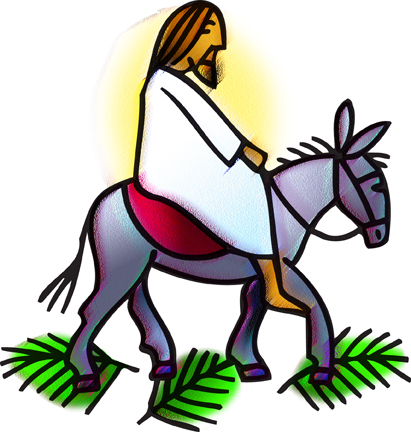
Palm Sunday is a festivity. It may sound weird a celebration in the middle of Lent for those who still do not know the meaning of our church year. Yes, it is a celebration because Jesus won, he is alive. It is the beginning of his victory on his way to the cross to defeat the devil and death. He is now in our midst alive, risen and in power.
It is a celebration in praise of God where we express our joy in God because he is shown himself as our king, our sovereign, our God. All those who believed his message during the three years of his ministry were now praising Jesus as the Son of God, the King and the Messiah. With the day that we call Palm Sunday, as we read in the Gospel, a period ends in the ministry of Jesus and another begins in the life of humanity.

Jesus was a human being and came to us as a mere man in order to reach us in a more understandable way. However, while he was incarnated in a human body, his Spirit was the Spirit of God. He lived as a man physically, but inside he was God. His mission was to tell the world that he had been sent by God to bring a message of hope, happiness and salvation. This was the message: All those who accept that God sent his Son into the world and choose to believe in God through him and accept that he came to sacrifice his life to give us salvation, will be considered saved and part of God’s flock.
This statement is very simple to understand, if indeed we accept it by faith or it can be very difficult and intricate if we see it with critical human eyes. This is not something we’re going to understand humanly, so you are free to accept it or not. It is only up to you and your faith in the gospel message.

The church is not an association or club, nor a civil organization or a company, nor a charity or aid organization. The church is not a philanthropic society; the church is not an ethnic entity or secular society. The church is a building itself, where those who profess faith in Jesus Christ come together to worship and praise His name. We meet to share His Word that is only registered in the book we call the Bible and it is our supreme authority. We come to church to seek His help. This help is not human. We come to seek divine help, that is, God’s help. When we pray, we are showing that we believe in Him. People who do not pray still do not believe in God. People who cannot pray have not accepted to believe in Jesus Christ as God and Savior. It is impossible to say that I am a Christian if I cannot pray to God. That’s a good sign to know if I am a Christian: Am I praying to God? Do I have a prayer life, a daily communication with God? If not, then there is an issue in my life of faith. There is something that is not complete in our spiritual life.

We can say that Palm Sunday brings to an end the time of preaching on earth for Christ. People no longer refer to him as a man, prophet or teacher. People praise him and pray to him and regard him as God. During this Holy Week there is the suffering, which we also call ‘passion’. For Christ suffers. Here begins Christ’s sacrifice. Jesus sacrificed for us. This is somewhat difficult to understand: why would he sacrifice himself? What for? These are difficult questions to answer. Even the greatest theologians could not answer them properly. But there is something we do can with our human nature: believe in it. God does not ask us difficult things. God does not ask you to become a theology professor or wise and all-knowing. All God asks for is your faith and commitment to him. That is the first step of faith.

This Easter I want to bring a simple, yet challenging, message. It is the same message Christ delivered throughout his ministry:
How is our life? Do we believe in Christ as the Son of God? Or do we still have doubts? How is our life? Do we believe that God died on the cross for us? How is our life? Do we agree that God is a loving God who only wants to fill our life with love and forgiveness? How is our life? Do we put our faith and trust in Christ, as he is God? How is our life? Do we pray to God daily or are we not able to pray and or do not know what that is or how to do it? Could we answer these questions in a positive and clear way? If we truly want to be a Christian, we have to meditate on these questions. God wants to change us. And the change that we need to make begins with our own spirit.

In this Holy Week, there may be a unique opportunity for us to see that we’re here today, in this building, not because of custom, even though you may have come here for many years. We’re in this building because it is a church. And I always like to explain to the confirmands the meaning of the word church. The word church comes from the old English “Kirk”, this in turn from the Greek word “Kyrios” which means “Lord”. That’s why we say the day of the Lord. We go to the place where we remember the day of the Lord. And here is when we call upon God the Father, Son and Holy Spirit. God himself is present and wants to be praised, wants to be glorified, wants us to sing to him, wants us to read His word and, above all, wants us to believe in him and have a life of prayer. Surely, he is awaiting an answer from us in this season.

If our life is full of faith and reverence for him, surely you have a Bible in your house and open it every day, though you often do not understand much. And that’s obedience and faith. Surely, you are placing your life in God’s hands with confidence. That’s obedience and faith. Surely you pray in your own simple words daily. That’s obedience and faith. Surely you love your church and try to put it in the first place. That’s obedience and faith. If you are living that way and those things happen in your life then rejoice because you are sincerely praising God in the same manner as those people who praised him on Palm Sunday, even though you have not lived with Him and you could not wave palm branches before Him. But if you are waving branches with your heart, he will love you and bless you for that every day of your life.

Being a Christian is about other things too. When the second part of Great Commandment tells us: “Love your neighbor as yourself.” We are saying that we should love and help specifically and materially with work, money, help, love, affection and solidarity. We should do all of these works of love but we must remember to not overlook the fact that, first of all, all this must come after having praised, worshiped and glorified Jesus Christ as our Lord and Savior, as our king. For deeds done for God are worthless if they are not done firstly out of our gratitude and on his name. That is the mystery of the gift of salvation, of the priority of our faith and worship to him.

God wishes our worship. For Him is the very first thing.
Praising God means expressing worship through our own spontaneous prayer to God, with our joy, for he is our God and we come to a church for worshiping. When we worship, we are allowing him to come into our lives. If we can understand that and do it, God will begin to answer those things we still are not seeing answered in our lives.
And finally, I’d like to tell a nice but real story about the true meaning of putting our worship and trust in God first:

Around 1814, the citizens of Feldkirch, Austria, didn’t know what to do. Napoleon’s massive army was preparing to attack. Soldiers had been spotted on the heights above the little town, which was situated on the Austrian border. A council of citizens was hastily summoned to decide whether they should try to defend themselves or display the white flag of surrender. It happened to be Easter Sunday, and the people had gathered in the local church.

The pastor rose and said, “Friends, we have been counting on our own strength, and apparently that has failed. As this is the day of our Lord’s resurrection, let us just ring the bells, have our services as usual, and leave the matter in His hands. We know only our weakness, and not the power of God to defend us.”

The council accepted his plan and the church bells rang. The enemy, hearing the sudden peal, concluded that the Austrian army had arrived during the night to defend the town. Before the service ended, the enemy broke camp and left.

More than ever on Palm Sunday, God comes to ask us to remember that he expects from us praise, worship and glory as part of our fellowship with him.
The peace of God, which transcends all understanding, will guard your hearts and your minds in Christ Jesus. Amen

God Always Forgives Sins

Sermon for the Fourth Sunday in Lent- E. Pellini
Luke 15:1-3, 11b-32
The tax collectors and sinners were all gathering around to hear Jesus. 2 But the Pharisees and the teachers of the law were whispering among themselves. They said, “This man welcomes sinners and eats with them.”
3 Then Jesus told them a story
“There was a man who had two sons. 12 The younger son spoke to his father. He said, ‘Father, give me my share of the family property.’ So the father divided his property between his two sons.
13 “Not long after that, the younger son packed up all he had. Then he left for a country far away. There he wasted his money on wild living. 14 He spent everything he had. Then the whole country ran low on food. So the son didn’t have what he needed. 15 He went to work for someone who lived in that country. That person sent the son to the fields to feed the pigs. 16 The son wanted to fill his stomach with the food the pigs were eating. But no one gave him anything.
17 “Then he began to think clearly again. He said, ‘How many of my father’s hired servants have more than enough food! But here I am dying from hunger! 18 I will get up and go back to my father. I will say to him, “Father, I have sinned against heaven. And I have sinned against you. 19 I am no longer fit to be called your son. Make me like one of your hired servants.” ’ 20 So he got up and went to his father.
“While the son was still a long way off, his father saw him. He was filled with tender love for his son. He ran to him. He threw his arms around him and kissed him.
21 “The son said to him, ‘Father, I have sinned against heaven and against you. I am no longer fit to be called your son.’
22 “But the father said to his servants, ‘Quick! Bring the best robe and put it on him. Put a ring on his finger and sandals on his feet. 23 Bring the fattest calf and kill it. Let’s have a feast and celebrate. 24 This son of mine was dead. And now he is alive again. He was lost. And now he is found.’ So they began to celebrate.
25 “The older son was in the field. When he came near the house, he heard music and dancing. 26 So he called one of the servants. He asked him what was going on. 27 ‘Your brother has come home,’ the servant replied. ‘Your father has killed the fattest calf. He has done this because your brother is back safe and sound.’
28 “The older brother became angry. He refused to go in. So his father went out and begged him. 29 But he answered his father, ‘Look! All these years I’ve worked like a slave for you. I have always obeyed your orders. You never gave me even a young goat so I could celebrate with my friends. 30 But this son of yours wasted your money with some prostitutes. Now he comes home. And for him you kill the fattest calf!’
31 “ ‘My son,’ the father said, ‘you are always with me. Everything I have is yours. 32 But we had to celebrate and be glad. This brother of yours was dead. And now he is alive again. He was lost. And now he is found.’ ”


A wonderful story of repentance and turning to God. A story that can cause the heartbreak of many and even tears. Or a story that may be just nice to some others. Why the difference? Because many of us find ourselves, perhaps, in the eldest son’s position. The eldest son represents believers faithful to God and his church. The youngest son represents people who once had fellowship with God, but because of sin they lost it. The father represents God in this story.

The eldest son represents believers, perhaps like us, who have believed in Christ their entire lives and have been part of the church for many years. Perhaps we never had the misfortune to fall into sin or to separate ourselves from God and the church in such a drastic way, as in the parable, like the separation of the youngest son from the father’s house.

This parable is addressed first of all, to Jesus’ contemporaries. The younger son who wants to leave the father’s house not only represents sinners, but also the people of Israel who did not want to accept and obey Jesus as the Son of God. And this is rejecting God himself, the Father. The religious of then, rejected that Jesus was in touch with sinners, that is with the marginalized of the Jewish religion, such as tax collectors and prostitutes, so Jesus wanted them to be compassionate with them. Not with the sin, but with the people separated from God.
Jesus wanted to show them that the relationship with God must be a relationship of obedience of His commandments, but at the same time to show sinners his same love and mercy so that they too can return to have a fellowship with God the Father.

Likewise, it causes us, sometimes, incomprehension or rejection, as it happened with the eldest son, that people that were separated from God can obtain grace and forgiveness, and they begin to live a life full of faith and trust and commitment to the church that, sometimes it is difficult to understand and to accept. Well, this new fellowship sometimes becomes even more committed than ours. Such was the younger son’s change, and his repentance and recognition of what it means to once again live a life in fellowship with his father.

Two very important messages come from this parable for us today and here: First, sin separates and breaks the relationship with God and that this can happen to anyone of us, we are not exempt from it. And secondly, we must be compassionate with those who are in sin and try to love them so that they can once again find the way to Christ.

I would also like to talk today about the concept of sin. Jesus himself uses this expression. Jesus does not deny the existence of sin. He says that: “I tell you that in the same way there will be more rejoicing in heaven over one sinner who repents than over ninety-nine righteous persons who do not need to repent.” (Luke 15:7)
He makes a clear difference between the one who sins and the one who doesn’t. For him it is clear that they are not two types of people alike.

The word sin in our society, especially for non-believers, sounds like an old-fashioned expression. It’s like something from the past, even outdated and backward. A word that is only used in certain churches, but perhaps not in our realm. For us it is not an old-fashioned word. It is a word that it’s still valid. Sin means nothing more and nothing less than separation from God, remaining far from God’s laws and the benefit of a fellowship with him.

And what is this separation? Or, how can we realize that we live apart from God? The only reference we have to prove it is the Bible. When we do not live our life according to the word of God, we are living a life in our own way, and not as God wants, that is, not according to his will.
Today there are many who question what the Bible says and believe they have more authority over it by wanting to interpret it at their own convenience or put before other philosophies or principles for the interpretation. There are many who question the Bible, saying that the Bible needs to be reinterpreted or adapted to our times, as if our generation were the authorized possessor to give another interpretation or omit certain parts of the Bible according to their opinion. I even heard it once said: God does not intervene in the world through a ‘mere book’—meaning the Bible. They say that God appears and manifests himself in many other ways. And that is true, God constantly manifests himself through his Holy Spirit, but that does not contradict that He himself has manifested more than anything to human beings in the written form of what we now call the Bible. There the Will of God is expressed. That is why we must be careful not to confuse the ‘spirit of this world’ (1 Cor 2:12) with the Holy Spirit of God. Every time we approach the Bible with faith and respect for God, we will receive a message that goes beyond our limits.

For Jesus, sin was something clear. It means to be separated from God. Live a life that has nothing to do with his word. Jesus never discriminated against anyone. He was always there nearby; he approached sinners, but with the intention that they repent and turn to God. And he got it, more than anything because he is God, but also because of his neighbourly love. This is the love that Jesus asks us to put into practice.

Some time ago I read a quote by Billy Graham that I liked, and I am sharing with you: “It is the Holy Spirit’s job to convict, God’s job to judge and my job to love.”
We have to see the whole world with the eyes of Jesus, worthy of being loved, but not for that reason approve what many are doing that may not concur with the will of God. Jesus does not approve of sin.
He expelled from the temple the merchants who wanted to take advantage of people and so desecrate and disrespect the temple; He accused Judas of betraying him; He faced the corrupt life of Zacchaeus the tax collector or the disorderly life of the Samaritan woman; or the morally wrong life of the adulteress. Although he accepted them all, he also forgave them “from their sin” and told them more than once: “Go, and sin no more” (Jn 8:11). He also said: “I have come to call not the righteous but sinners to repentance” (Lk 5:32).
The society in which we live, however, sometimes not so Christian, tells us to do everything that makes us feel good, to do what we feel, to enjoy life, because the most important thing is to feel happy and love the entire world, showing peace, and happiness, and love. And that’s all true; it does not contradict Jesus’ promise when he assures us of “a live to the full” (Jn 10:10) for all who follow him. But that life in fullness is a new life in Christ based on his teachings.

When Jesus in the words of the father of the parable speaks: “This brother of yours was dead. And now he is alive again. He was lost. And now he is found.” He is speaking not only of a conversion, that is, of beginning to believe in Christ as the Son of God, but also of a change of life. It is not enough to say: I believe in God, but we are invited to live out God with our way of life.
If today we ask Jesus, where can we get the information to know what are the things that you want us to change so that we can be in your fellowship again? Surely Jesus would tell us:
“They who have my commandments and keep them are those who love me; and those who love me will be loved by my Father, and I will love them and reveal myself to them” (John 14:21) Where are those commandments? In the Word of God, the Bible, that is the foundation of our faith.
Throughout the history of salvation, we see in the Bible, and in the history of the church that God worked and manifested himself through his Spirit in personal lives, in families, and in many communities that were faithful to his word, it is not otherwise.

May God allow us to remain faithful to His Word that is still valid. And that, through our commitment, the Holy Spirit may work in our midst, so that our lives are filled with the wisdom of God and the true love of his Son Jesus Christ. And may God’s favour and joy for having returned again and again to the father’s house come true.

Amen